

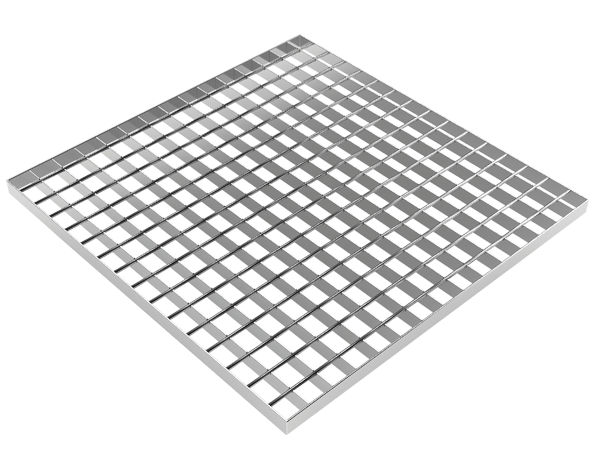
Welded pressed gratings
test elementor
The grating can be hot-dip galvanized in accordance with the applicable EN ISO 1461 standard. The press-welded grating is used in numerous industrial sectors for Catwalks or Stair treads for use.

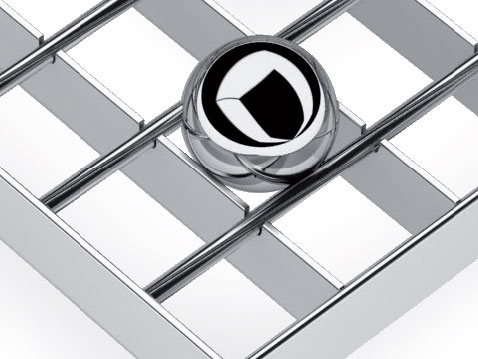
- Standard meshes: 30x30, 30x44, etc.
- Standard security meshes: 19x19, 19x40, 30x19, etc.
- EDF mesh: 30x27.
- Other options are available on request.
- Standard height: 25-60 mm.
- Standard thickness: 2-5 mm.
- Other options are available on request.
- Twisted square: 4-6 mm.
- Smooth rounded configuration available on request.
- Maximum length of bearer bars: 6100 mm..
- Maximum length of twisted squares: 1000 mm, other options are available on request.
- S235JR steel as per EN 10025 standards.
- Galvanized in accordance with EN ISO 1461 standards.
- Lacquered in accordance with standard RAL.
- Bituminous paint.
- Other options are available on request.
- The bearer bar may be notched on request.
Load tables
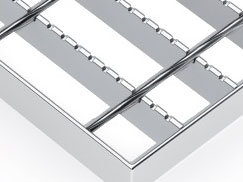
Press-welded grating is obtained by electrical welded transverse bars, which are usually square and twisted (but can be round and straight) into the bearing bars. The grating is produced with “flat” banding, and then optionally undergoes hot-dip galvanizing in accordance with the applicable EN ISO 1461 standards. For an optimised anti-slip surface, it is possible to produce serrated press-welded grating, with serration on the bearing bars only. It is typically manufactured from EN 10025 standard S235JR steel which ensures a consistent production quality. RAL-GZ 638 manufacturing tolerances applied.
BBs and TBs fixed in place

Electrowelding

Gratings for the industry
- Thermal, hydro-electric, nuclear and solar power stations
- Chemical and oil industries
- Automotive and steel industry
- Shipbuilding
- Cement works
- Transformation and metallic construction
- Railings and fencing
- Emergency stairs
- Railway and transportation industries
- Drains and ventilation systems
Gratings for architecture
- Decoration
- Sun shadings
- factories, airports
- Cladding
- Urban furniture
- Gangway
- Multisports grounds

Mesh
Spacing between bearing bars (BB) and transverse bars (TB). Mesh created in this way has two characteristics: mesh width and mesh centre spacing (pitch).
- Mesh width: the width of the opening that is between the BBs and TBs
- Mesh centre spacing (pitch): the distance between the centre of BBs and TBs (for example, the distance between the centre of one bearing bar and the centre of the nearest adjacent bearing bar

Mesh group | Type
Mesh is made up of two values (in mm), where the first dimension is the distance between adjacent bearing bars, and the second dimension being the distance between adjacent transverse bars (for example: 33.33 x 33.33; 33.33 x 11.11; 55.55 x 55.55; etc.).
For convenience’s sake, the term “mesh gauge” is more frequently used (for example: 30 x 30 - 30 x 10 - 50 x 50 - etc.)
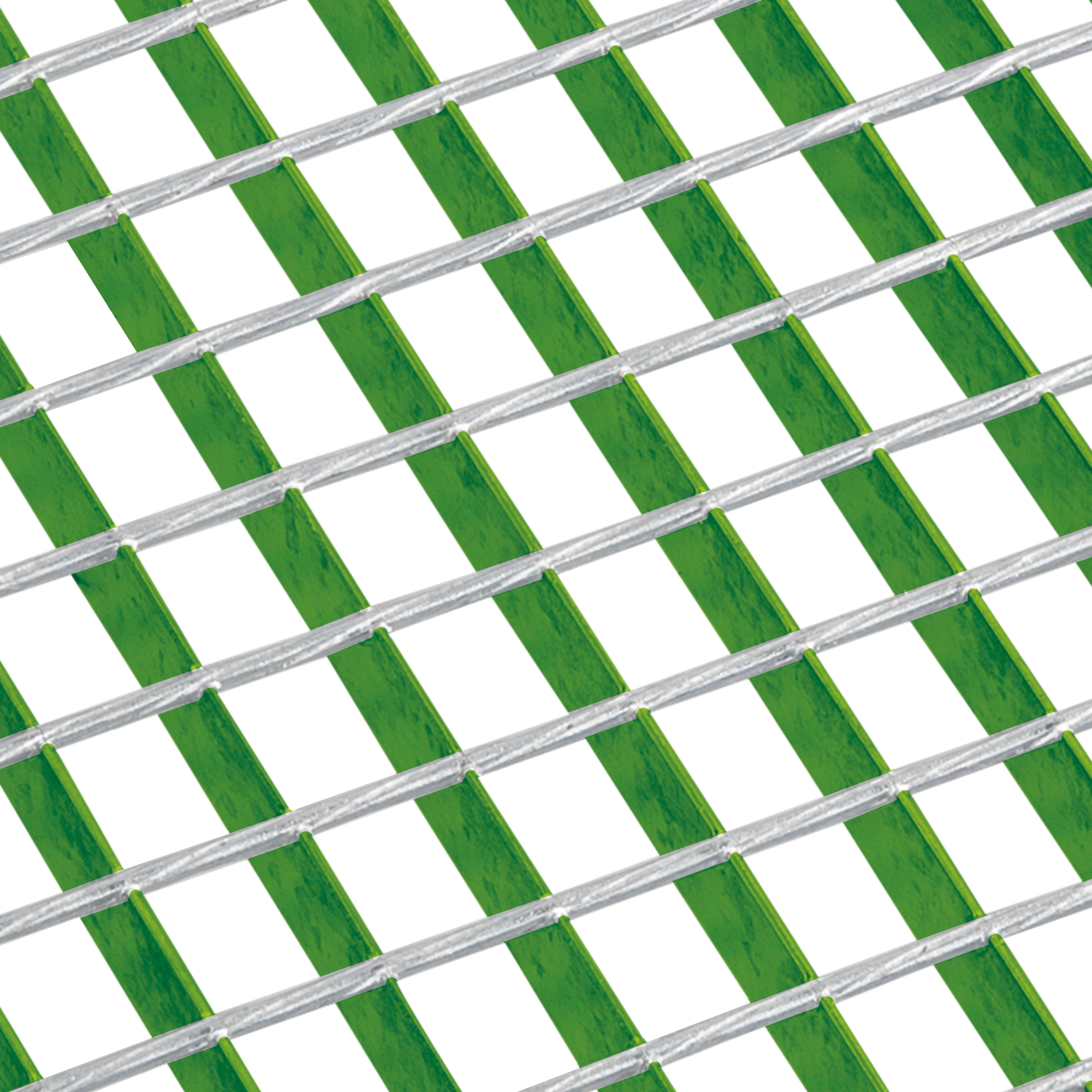
Bearing bars (BB)
Straight rods bearing the weight and arranged in rows at right angles to the transverse bars and supports.
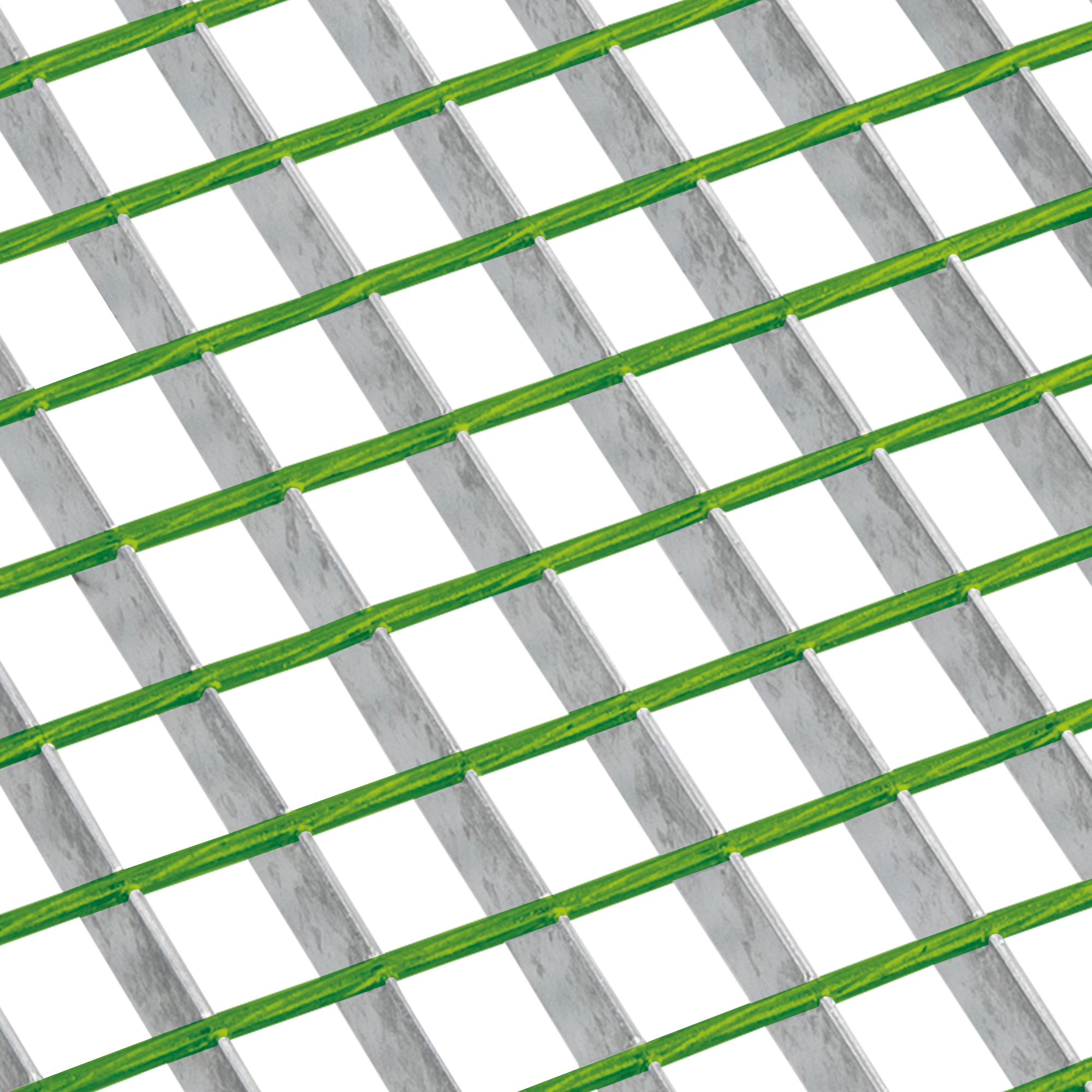
Transvers bars or cross bars (TB)
Arranged at right angles to the bearing bars, and bonded to the bearing bars by electrowelding. The transverse bars are manufactured as square, twisted bars.

BB and TB gauge
This is defined by two values (in mm), where the first corresponds to their height and the second to their thickness. Gauge examples: 30 / 2; 30 / 3; 40 / 3; etc...

Range
Gap between the supports on which the ends of the bearing bars rest.
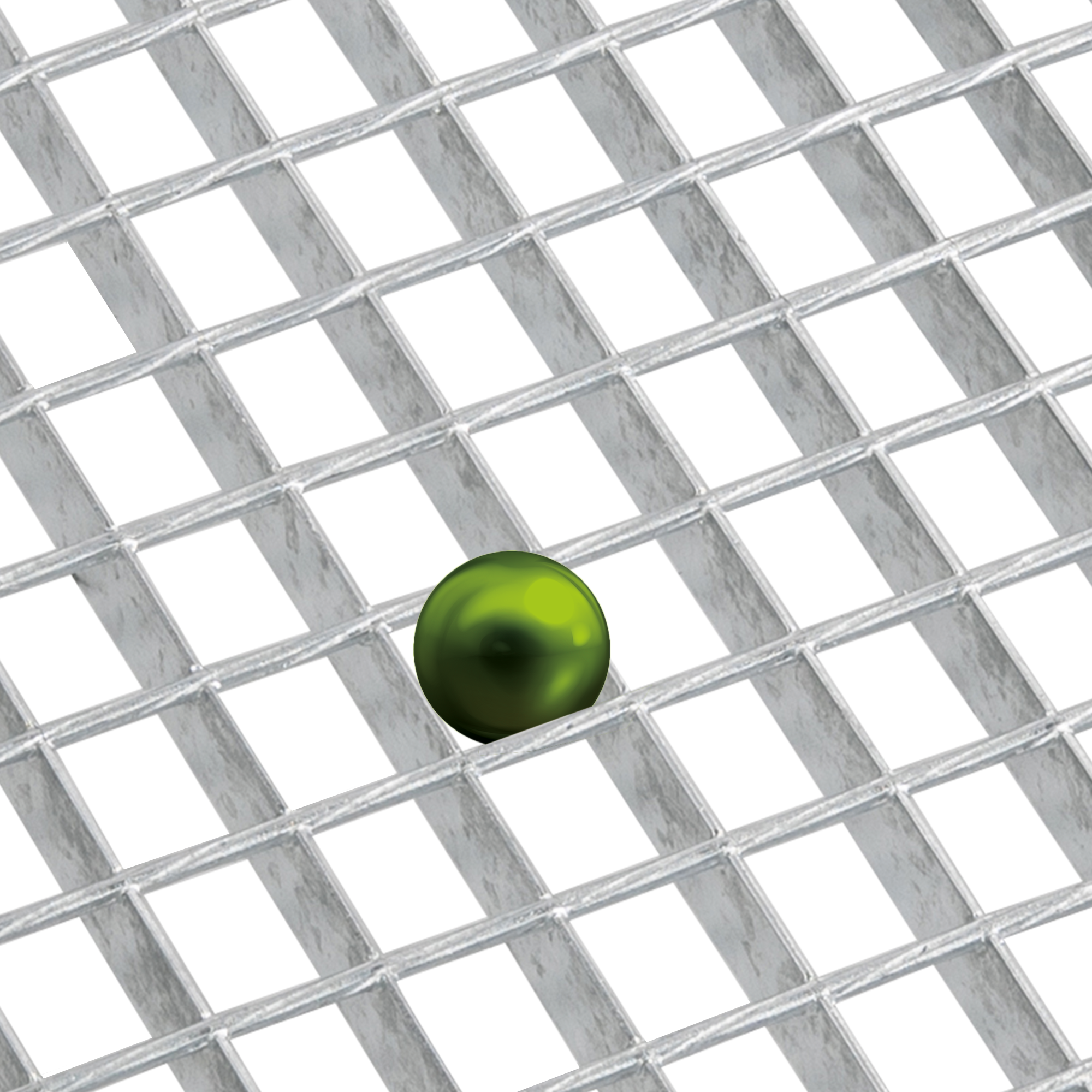
Impermeability – Security bars
Security mesh uses the following mesh gauge: 30 x 19; 19 x 30; 19 x 19; etc. It is recommended for industrial environments (14122 standard) and allows nothing exceeding a 20 mm diameter ball to pass through it.
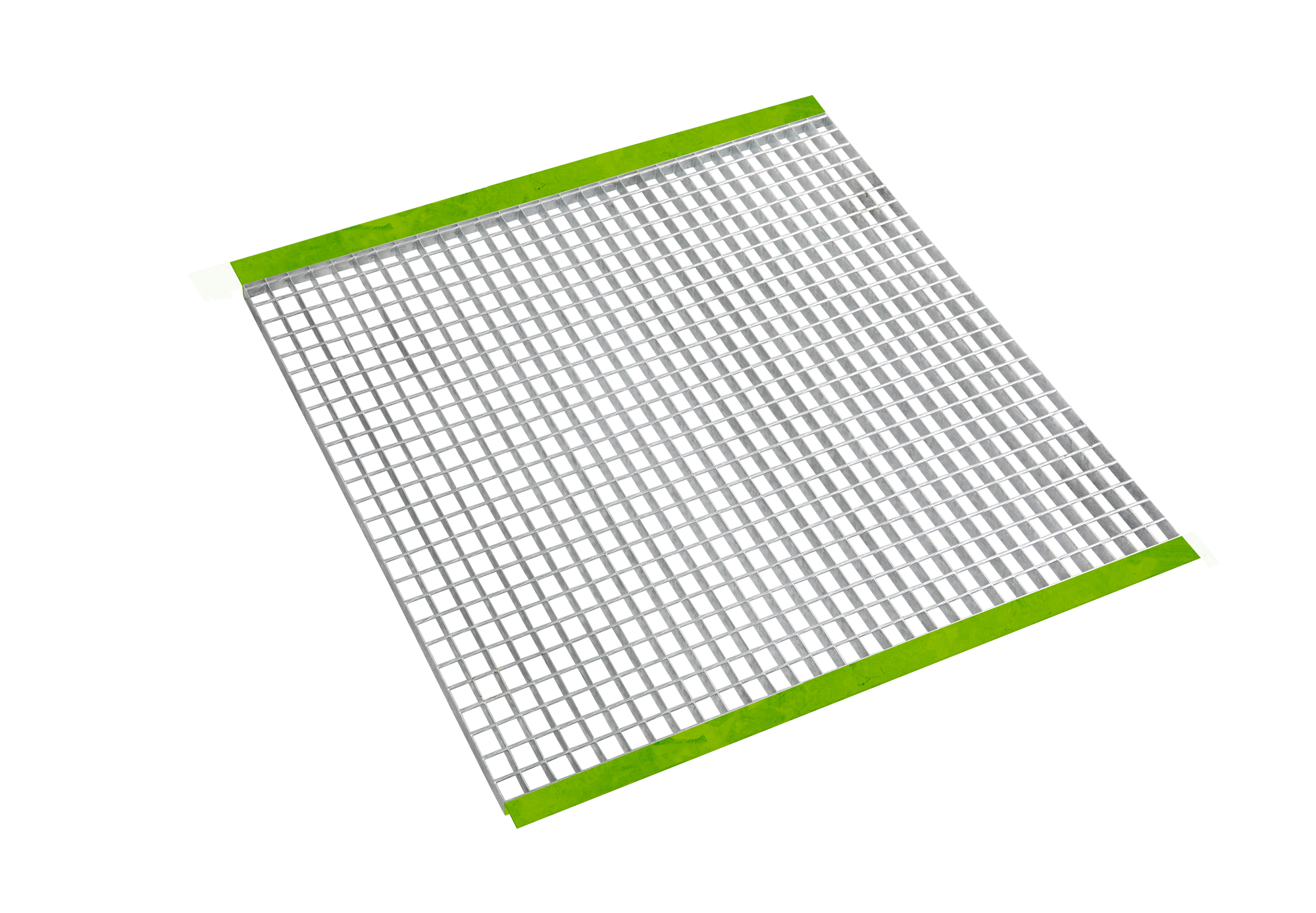
Support braket
Bracket welded to the ends of the grating rendering it suitable for certain uses (for example: shelving, guttering).
Steel

Stainless steel
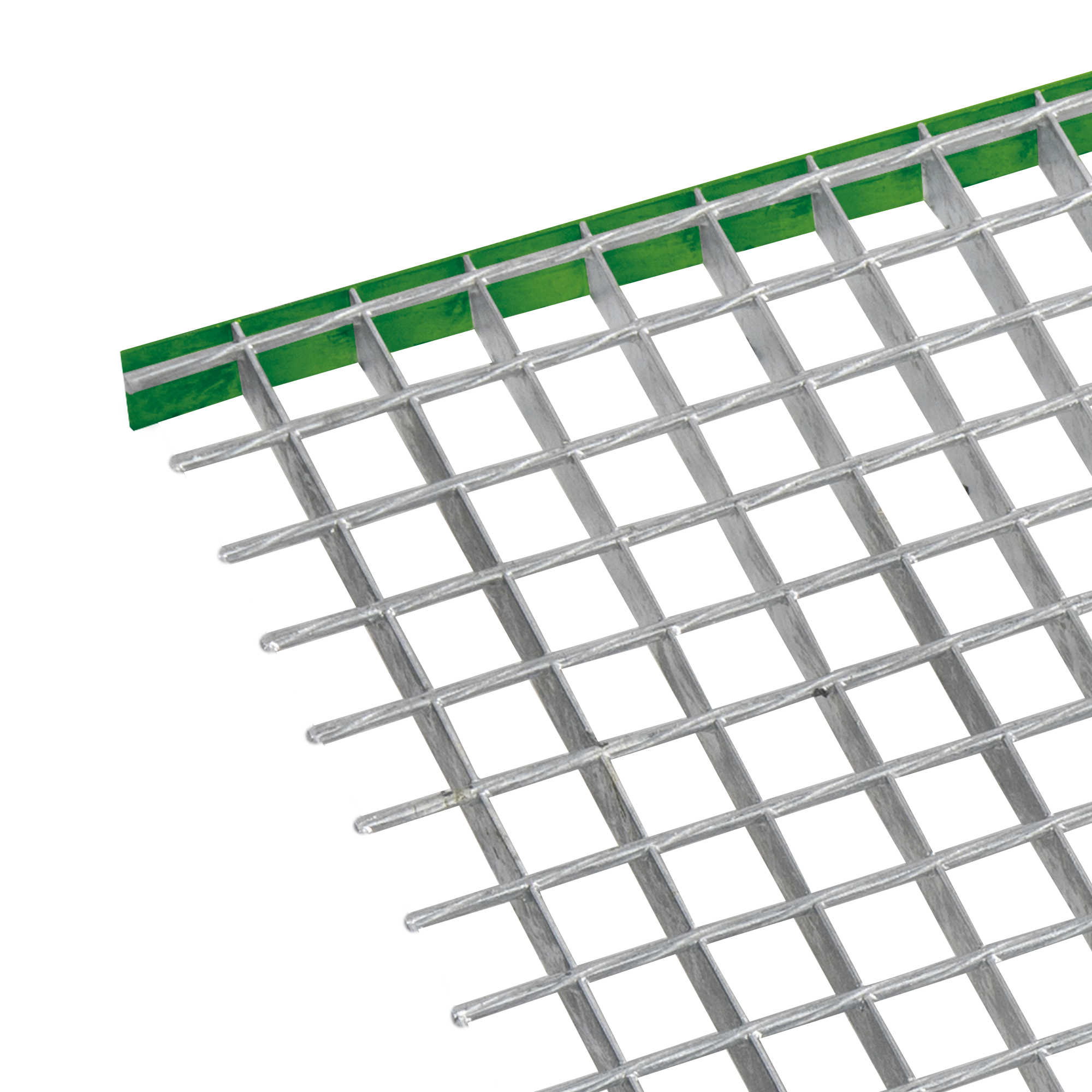
"Flat" banding bar
Bar which forms the outer frame of the panels.
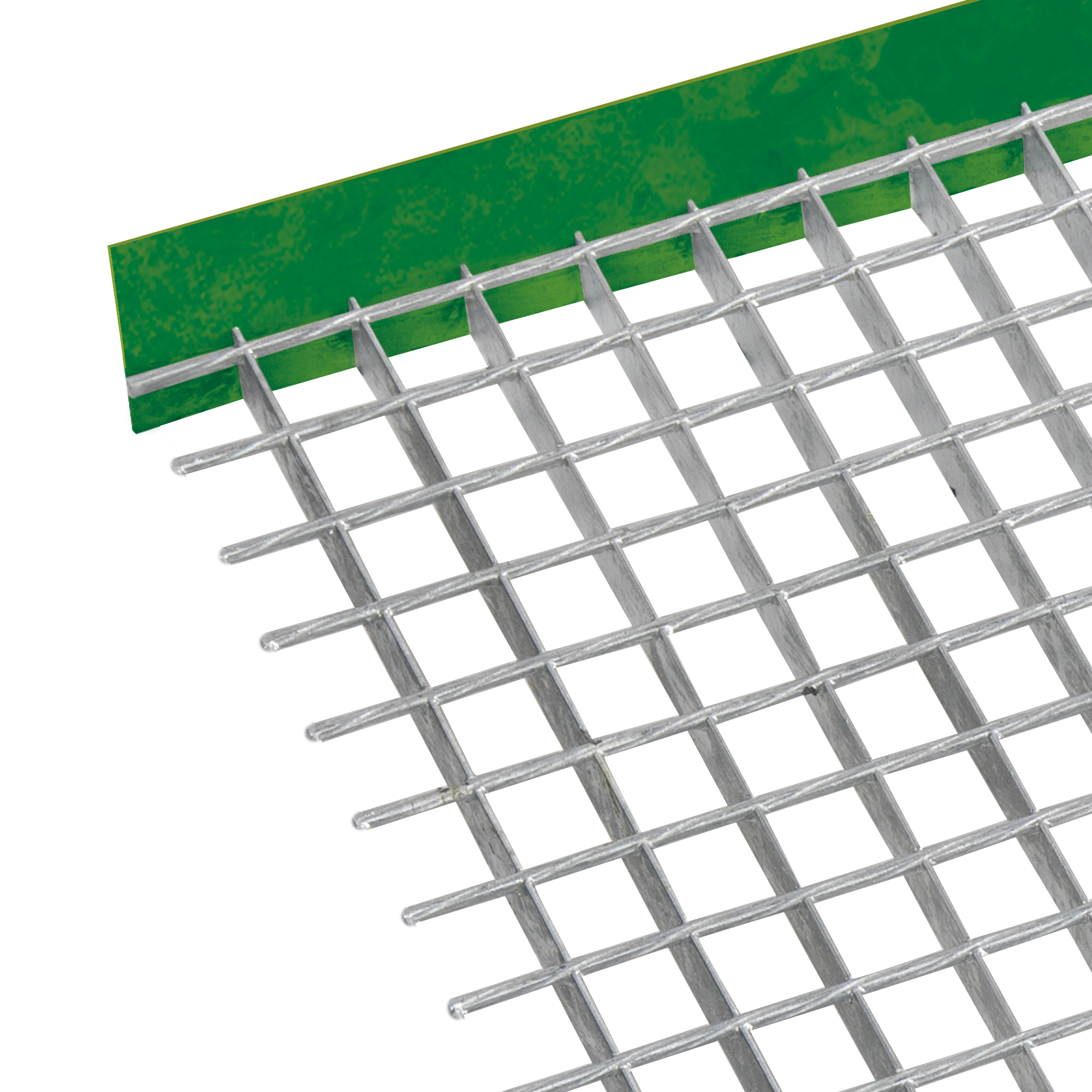
Base panel
Straight metal welded onto the end of the grating
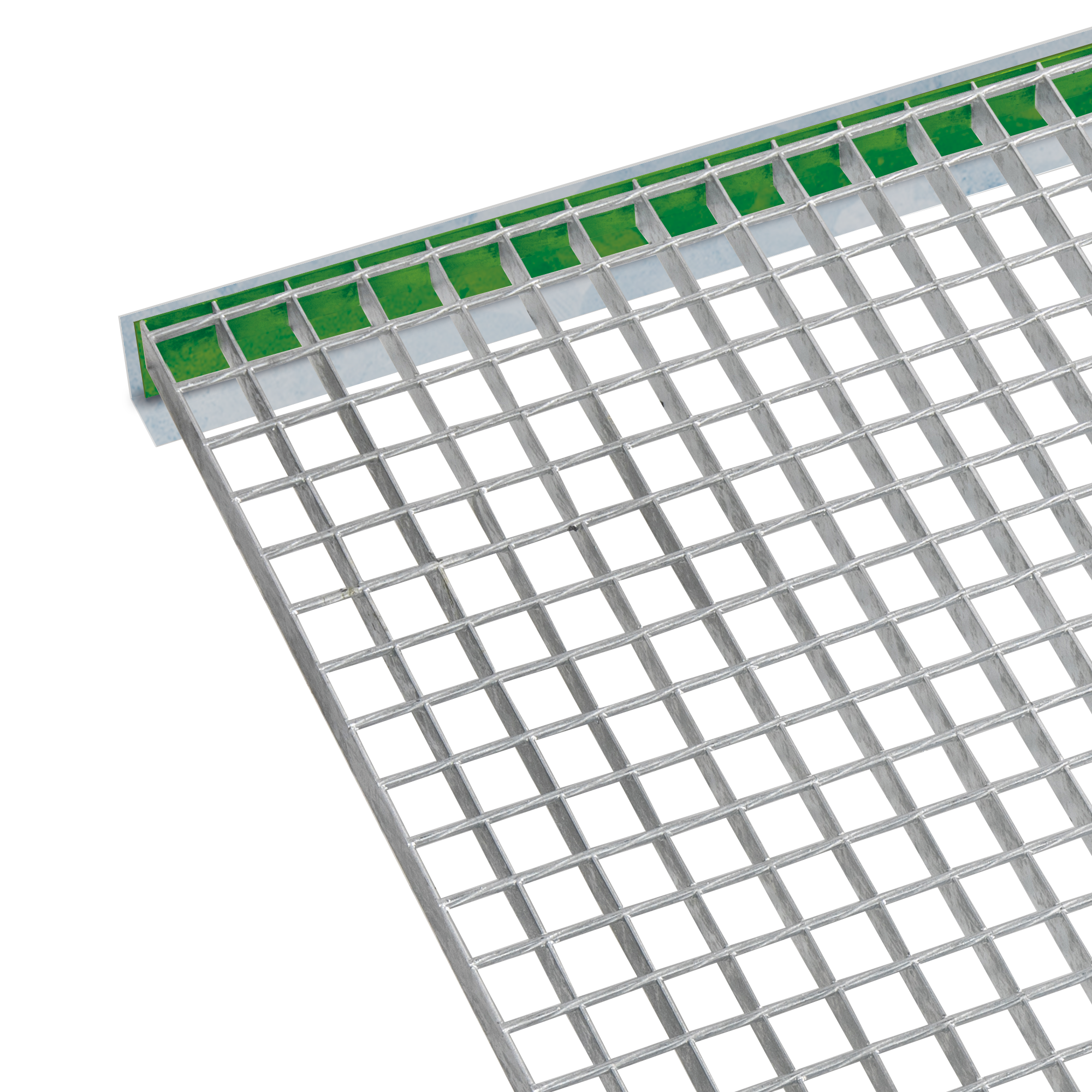
Raised border
Straight metal welded onto the end of the grating
Serration can only be applied to bearing bars for press-welded grating.

Simple anti-slip serration on BB
ISO 14122 : Permanent means of access to machines and industrial plants
ISO 14122-2 : Working platforms and walkways
ISO 14122-3 : Stairs, ladders and handrails
RAL-GZ 638 : Manufacturing tolerances for gratings
RAL-GZ 639 : Manufacturing tolerances for safety grids
EN ISO 1461 : Galvanisation requirements
EN 10025 : Steel standard


 English